Strater Hotel: the Grande Dame of Durango, Colorado
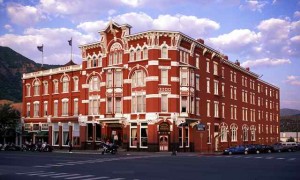
Strater Hotel in Durango Backdropped by a Quintessential Colorado Blue Sky

If you’ve read some of my posts on my blog and/or if you’re familiar with my books on France, you likely know by now that I love hotels. Historic hotels in particular move me. I’m a big fan of experiencing these bastions of history and tradition during one’s travels, whether it’s to pop in for a drink or to stay a few nights. No matter how you choose to discover these landmark properties, a visit to them allows you to soak up the spirit of the place for either a brief moment or a more luxurious stay. The world is peppered with such places of lodging, steeped in history, that folks have been enjoying in many cases for more than a century. I encourage my readers to seek them out at every turn because it’s often within their splendiferous interiors that we gain the true essence of the place we’re visiting; it’s here we’re able to peer into the past while embracing the present.

In most cases, these fine establishments serve as the cornerstones of the cities and towns we love to visit. Many were built during the golden era of that destination in an effort to express to the world all that the town had achieved, all that the community was becoming. Erecting a notable place of lodging for business and leisure travelers alike was a sure-bet way of putting a destination on the map in addition to providing the right conditions for welcoming visitors in a more dignified and glorious manner.

Nearly every town and city in Colorado boasts a fine hotel, most of which were built during the boomtown era of the mining days toward the latter part of the nineteenth century. It was one of the most significant ways of saying “we’ve arrived.” Finally an old cow town could receive its potential investors and other movers and shakers of the day in a proper manner. The Strater Hotel in Durango, Colorado stands out as one of the finest examples of this necessity to build a handsome place of lodging in emerging towns throughout the West.

Strater Elegance

As Durango’s future hung in the balance between a mining camp and a metropolis, a very young Cleveland pharmacist named Henry Strater had the vision of exactly what this southwestern Colorado town needed: a grand hotel. He fibbed about his age, borrowed money and forged forward. Toward the end of the 1800s, the Strater Hotel opened and its 376,000 native red bricks and hand-carved sandstone cornices and sills are as resplendent today as at its beginning.

In more recent years, the Barker family restored this Victorian gem to its original glory while updating it with today’s amenities. Staying in one of the hotel’s guest rooms, each handsomely decorated with hand-carved woodwork, beautiful Bradbury and Bradbury wallpapers and fine antiques, makes you feel like you’ve stepped back in time. The hotel’s collection of American Victorian-era walnut furniture is, in fact, one of the largest in the world. Renowned western author Louis L’amour loved the Strater so much that he would hole himself up in room 222, just above the hotel’s Diamond Belle Saloon to write his western-inspired novels. The honky tonk music from the Diamond Belle apparently helped set the mood for his writings about the Old West.

The Diamond Belle Posse

Still going strong today, no trip to Durango is complete without entering the Diamond Belle Saloon, a gilded scene straight out of the Far West. There’s always great entertainment to be enjoyed filled with exuberant piano playing and old time-y tunes. If you’re looking to pass a more reserved moment at the Strater, have a drink at The Office Spiritorium, a handsome bar/lounge where you can enjoy drinks, appetizers and fine music. New American cuisine is served nightly in the Mahogany Grille, also within The Strater.

For a real step back in time, check out the Durango Melodrama & Vaudeville at The Henry Strater Theater, a tradition that has marked Durango summers for forty-eight years. Good news:  This year the shows are running through September 24th, a real testament to the increasing popularity of this event since they previously ended in August. Here’s Webster’s definition of melodrama:  a work (as in a movie or play) characterized by extravagant theatricality and by the predominance of plot and physical action over characterization. I’ll also add that you should expect lots of audience participation, so it’s best not to arrive late or you’ll miss the necessary cues. Here, too, the tickling of the ivories doesn’t get much better.

As you can perhaps tell from all the offerings, the Strater represents the hub and the heart of Durango, one of the best darn towns in the West. Today you can still rub elbows with ‘ole cowboys and ranchers (especially on weekend nights) along with outdoorsy types of every ilk. Durango and the Strater seem to be more happening than ever. Isn’t it lovely how they’ve moved forward while honoring their past? Even if you only have a moment, take a little walk around the lobby at The Strater Hotel and admire the Victorian elegance and western charm of this iconic establishment. And even if it’s just for a fleeting moment, here I promise you’ll breathe in a good whiff of the West’s prominent past.

Strater Hotel, 699 Main Avenue, Durango, Colorado, 800-247-4431, www.Strater.com

Visit Durango Area Tourism Office for more information on this fun town. 


Chipeta Sun Lodge & Spa: Spirit of the Southwest in the Rockies
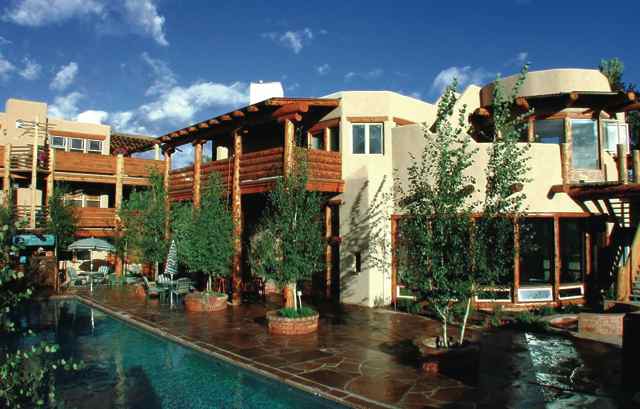
Chipeta Sun Lodge & Spa

Chipeta Sun Lodge & Spa

Can’t decide whether you want to vacation in the Southwest or the mountains? How about choosing a place of lodging where you enjoy the spirit and landscapes of both? Check out Chipeta Sun Lodge & Spa, a lovely southwestern-inspired adobe retreat set within the majestic San Juan Mountains, just an hour from Telluride, Colorado. Situated in the charming little town of Ridgway (featured in John Wayne films such as “True Grit”), I often recommend Chipeta as an excellent base for visiting the many interesting sites and towns that pepper southwestern Colorado and southern Utah.

If you travel further into the mountains from Ridgway, you can easily explore the historic old mining towns of Telluride, Ouray and Silverton. If you head toward Montrose, you can hit the Ute Indian Museum, a well-worth-the-stop attraction that showcases one of Colorado’s most complete collections of Ute ceremonial and traditional artifacts. Just on the other side of Montrose, plan to spend at least a half day at Black Canyon of the Gunnison National Park, a stunning and somewhat spooky site that provokes nearly as many oohs and aahs as the Grand Canyon. And within a two-hour drive you can find yourself amidst the striking red rock of Moab and other parts of southern Utah in addition to Arches National Park and Canyonlands.

Since there’s so much to visit in the area and most of the lodging at Chipeta includes condo-type units, you’ll likely want to check in here for a week. Plan at least a couple of relaxing rest days where you can stay put at this warm and welcoming lodge just to loll by the pool or enjoy a treatment in their spa.
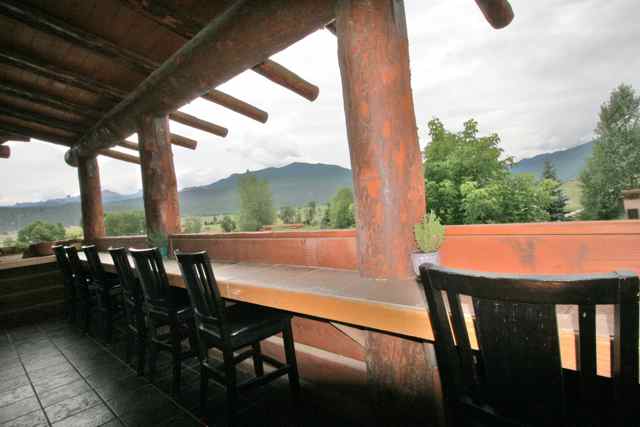
View from the Porch of Chipeta's Four Corners Cafe

View from the Porch of Chipeta's Four Corners Cafe

Whether you’re staying at the lodge or just passing through, a stop at Chipeta’s Four Corners Cafe for dinner or drinks is a must. Here you’ll be enchanted by the striking vistas provided from the top-floor location of this casual restaurant and bar. Inside, the scene serves up heaps of southwestern charm within its desert rose-colored interior. As the sun sinks beneath the mountains, you’re bathed in pink light most evenings whether you’re seated inside or out.
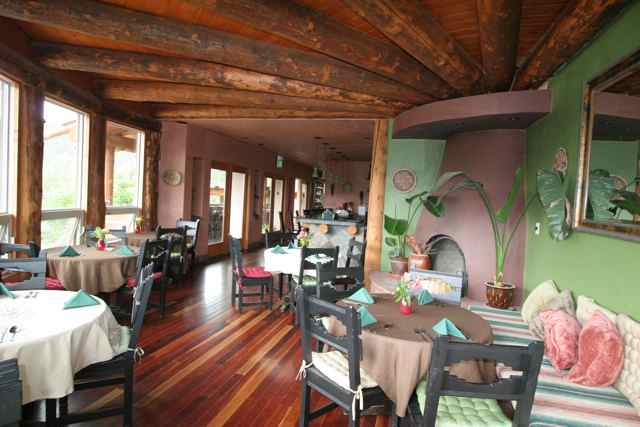
The Sunny Interior of the Four Corners Cafe

The Sunny Interior of the Four Corners Cafe

Indeed this heartwarming lodge is aptly named. It’s called Chipeta, in honor of the lovely wife of Chief Ouray, head of the Ute Indians that once inhabited this land, a gentle woman that eventually became “queen” of both the whites and the Utes of the region. Embracing the rich diversity of this part of the country is what Chipeta, the lodge and the beloved Native American figure, are all about.

Chipeta Sun Lodge & Spa, Ridgway, Colorado, 800-633-5868, www.chipeta.com

July is a wonderful time to visit Chipeta Sun Lodge and its Four Corners Cafe, especially this year with such a rockin’ Ridgway Concert Series lineup. Free concerts take place every Thursday throughout the month from 6p.m. ‘til dark in Ridgway’s Town Park. What a great way to kick off the weekend!

Colorful Colorado

Telluride's Valley Floor

Telluride's Valley Floor

Wow.  Wow.  Wow.  What an extraordinary end of summer/fall it has been.  We’ve had nearly three weeks of breathtakingly-beautiful weather here in the Rockies and the forecast promises more sun and warmth for the upcoming week.  The colors have popped.  It looks like the leaves in the San Juan Mountains, the range located in the southwestern corner of Colorado, will be peaking this weekend.  Usually when that happens, a snowstorm blows in, but this year we’re to be blessed with more fine leaf-peeping days throughout a good part of October.  Scenery like this makes me wonder why people battle the crowds and traffic jams of New England for their annual fall foliage tour.  I recommend you sign up for the wide, open spaces and shimmering aspens of the Rockies next year!

The festivals continue here in Telluride.  This week marked the culmination of the first annual Telluride Photo Festival, an event that drew world-class photographers from near and far.  Mother Nature cooperated generously, making it a kick off to remember.  Conservation and fine arts photographer Robert Glenn Ketchum was among the distinguished experts giving workshops and presentations.  Neil Hastings, Sales & Marketing Director of Mountain Lodge Telluride, became so impressed with Mr. Ketchum’s emphasis on the importance and responsibility of bringing nature conservation into your work, that he ventured out to take the above picture of Telluride’s Valley Floor.  “I wanted to honor his (Robert Glenn Ketchum) work and bring attention to the Valley Floor, a land that will remain forever wild,” Neil says.  “Let the elk and bear roam free,” he adds.  Well Neil, with pictures like this you might just have to quit your day job!  In any event, keep up the inspiring work and thank you for sharing this image with me.

Oh yes, I mentioned the continuation of festivals here in T-ride.  The Telluride Horror Show, a three-day horror film festival, will be making its creepy debut mid-October.  The old, dry leaves should be swirling and rustling about our Victorian mining town by then and although always stunning, our scenery might appear more foreboding by the time the ghouls sweep into town.

Thank you again to Neil Hastings for the above image.  Be sure to click on it to enlarge it to take in its full splendor.

Durango, the San Juan Skyway and the Western Movie Culture of the Four Corners Region According to Fred Wildfang

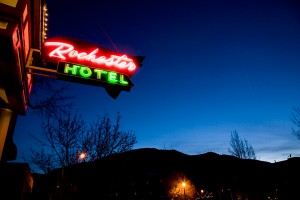
The Marquee-Lined Hallway of The Rochester Hotel, The Hollywood of the Rockies

The Marquee-Lined Hallway of The Rochester Hotel, the Hollywood of the Rockies

Writer and historian Frederic B. Wildfang has made Durango and the outlying area his passion for nearly two decades.  Author of a handful of books about this colorful corner of southwestern Colorado, Fred clearly loves the San Juans, the most striking mountain range of the Rockies.  ”It’s an interesting area historically and scenically,” Fred says in a recent Travel Fun interview.  And certainly its geological richness has left an indelible mark on the region from mining and ranching to tourism and western-movie making and much more.

Preserving Durango's Heritage:  Fred Wildfang and Family

Preserving Durango's Heritage: Fred Wildfang and Family

As for Durango, a dynamic town where Fred lives and works, Fred feels it’s a very friendly place filled with a great mix of the old and the new from weather-worn cowboys to fresh-faced outdoor enthusiasts from the nearby college.  He hikes everyday in the Weminuche Wilderness, the largest road-less area in Colorado, which lies just outside his door.  Fred also loves to use Durango as a base for visiting other great western destinations such as Creede, Colorado and Lake Powell, Utah.  In his most recent book, “Images of America:  The San Juan Skyway,” Fred features this unbelievably scenic 236-mile loop that wends through glacial valleys and over high ice-sculpted peaks, traversing the old mining towns of Silverton, Ouray, Telluride and Durango.  It’s one of the most renowned drives in America and one that you’ll want to take with Fred’s book in hand.

With such spectacular scenery and a wealth of remnants from the Old West, it’s no wonder so many western movies were filmed in the Four Corners area. Fred’s wife, Diane, and her son, Kirk, took over The Rochester Hotel, an historic hotel in Durango a number of years ago and renovated it to a heartwarming place to stay, one of my favorites in this fun-loving western town.  A must-see tribute to the history of western movie making in the region, the rooms and hallways of this cozy enclave showcase western movie memorabilia from Fred’s collection.  Each of the rooms is named after the movies filmed in and around the San Juans, beginning with “A Ticket to Tomahawk,” a western classic made in 1949 starring Marilyn Monroe. Fred talks about this movie and others in our interview.  You’ll discover that most of the westerns were filmed in the fifties and many boast a connection with the Durango & Silverton Narrow Gauge Railway, a national treasure that provides reason enough to travel to Durango.

Click on the play button below to hear my interview with Frederic Wildfang.

Play

The Rochester Hotel, 721 East Second Avenue, 970-385-1920 or 800-664-1920, RochesterHotel.com

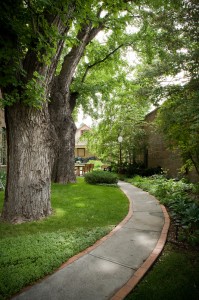
The Rochester Courtyard with an Old Rail Car

The Rochester Courtyard with an Old Rail Car

Book Picks

In addition to ”Images of America:  The San Juan Skyway,” mentioned above, if you’re going to Durango, you’ll also enjoy “Images of America: Durango,” authored by Frederic B. Wildfang as well. Go to ArcadiaPublishing.com to find out about these books and more.

The National Trust and Us

Richard Moe:  Our Nation's Leading Preservationist Enjoying the Great American West

Richard Moe: Our Nation's Top Preservationist Enjoying the Great American West

People don’t want to go to a place that has lost its soul.

—Arthur Frommer

Richard Moe, president of the National Trust for Historic Preservation, shared the above quote with me in a recent Travel Fun interview.  As our nation’s leading historic preservation organization, the Trust has saved the soul and character of countless places in its sixty years of existence. From main streets to historic sites, this bipartisan organization works tirelessly toward preserving our country’s heritage.

As a part-time resident of Telluride, I’ve had the privilege of chatting with Dick Moe about historic preservation and some of his favorite destinations several times.  He loves his time in the West and makes Telluride his base every summer for visiting some of the most significant cultural sites in the United States including Canyon of the Ancients in southwestern Colorado.  In our interview, he also talks about other exciting locales in the region such as Durango, Silverton, Chimney Rock and the Rio Grande Gorge in Del Norte.

As for Telluride, it’s clear that it stands a cut above all other Rocky Mountain destinations.  ”Telluride has done a better job of preserving its historic character than any other mountain town,” says Dick.  He also shares his thoughts on the Telluride Valley Floor, a 500-acre parcel of open space that he fought hard to preserve.

The Trust’s programs on sustainability and historic preservation are also discussed in our interview. Currently the organization is committed to a sustainability program that focuses on the environmental value of “recylcing” older buildings for new uses and retrofitting them for greater energy efficiency.

Heritage tourism is the fastest growing part of tourism, already a huge industry in our country.  The National Trust has offered tours all over the world for quite some time but they’re expanding their reach with Gozaic, a one-stop shopping portal for heritage travel.  You can hear what Dick has to say about this in our chat as well.

Listen to the entire half-hour interview I conducted with Richard Moe by clicking on the play button here:

People want to experience what’s real and genuine in communities.

—Richard Moe, President of the National Trust for Historic Preservation

Note that at the same time of this story posting, Richard Moe announced his retirement from the National Trust for Historic Preservation.  He has been the longest serving president in the sixty-year history of the Trust.  He plans to continue to hold that position until a replacement is found, likely in the spring of 2010.

National Trust for Historic Preservation, 202-588-6000 and 800-944-6847, www.preservationnation.org; you may become a member of the Trust and receive their award-winning magazine six times a year for as little as $20.

Ken Burns on America’s National Parks and Telluride

Ken Burns and "National Parks" Producer Dayton Duncan

Ken Burns and "National Parks" Producer Dayton Duncan

If you’re anything like me, you’ve been moved to tears every night this week watching Ken Burns’s six-part series, “The National Parks:  America’s Best Idea,” on PBS.  This work was a labor of love for this master documentarian for some ten years and I think most of America is grateful for it finally being available for all to see.  ”It is the history of the ideas and the individuals that made this uniquely American thing happen,” Ken told me in a Travel Fun interview I conducted with him early September.  ”For the first time in history, land was set aside for the people,” he continued.

You may listen to the entire forty-minute interview I conducted with Ken by clicking on the play button here:

Ken also chats about his twenty-year relationship with Telluride.  “It’s my lover,” he says. Listen to the podcast to find out why.   You’ll also learn more about Ken’s two-decade long relationship with the Telluride Film Festival and why he calls it “the best festival on the planet.”

I was lucky enough to see one of Ken’s films on our National Parks on the big screen at Telluride’s Mountain Film Festival last May.  Read about that experience here.

Book Picks

“Ken Burns:  The National Parks:  America’s Best Idea” at www.shoppbs.org/home.  You can buy this must-have tome and the DVD and receive the CD soundtrack for free.

Going to Gateway

Red Rock Grandeur

Red Rock Grandeur

“Now why did you say you wanted to come here again?”  I asked my friend, Paula, as we stopped in this middle-of-nowhere place called Paradox, squinting beneath the beating sun in search of a gas station, a store or some other significant sign of life.  My head pounded fiercely by now and both our car and I were positively parched.  

“I wanted to take some pictures of Paradox Valley, you know for that contest I told you about, the one to raise awareness about possible uranium mining in the area,” Paula replied as she drove across verdant plains framed by cliffs the color of buff, sandstone and ochre.  This contrasting display of nature must be the paradox, I blithely thought to myself as my head throbbed and we rolled through this shadow of a town, Paula clicking her camera like a sniper in a passing S.U.V.

We realized by now that there was no easy way to cleave our way through these rocky walls to Gateway, our ultimate destination, normally just a two-hour plus drive northwest of Telluride.  Our detour to Paradox had proved scenic enough, but now we needed to speed up our travels.  We had no choice than to turn around and drive back to Bedrock, the little speck we passed through on our way to Paradox Valley.  

Gas Sign at Bedrock

Gas Sign at Bedrock

We both felt greatly relieved as we pulled up to the Bedrock General Store—the only apparent business in the whole area—and spotted their sixties’ era gas pump out front.  Paula took charge of gassing up while I trotted off to the outhouse, a remarkably clean wooden shack with nothing more than a finely carved barn wood seat set on a board over a whole in the ground.  Still it boasted more charm than today’s porta-potties.  Dim lighting, creaky wood floors and display cases and a rather scant selection of necessities—from tampons to real beef jerky—cultivated my already burgeoning feelings of being locked in time once inside this old-fashioned grocery store.  I payed for my refreshments and stood on the front porch and gulped my Aquafina.  The desolate, high desert-like landscape that stretched before me made it feel as though it had been days since we left the cool alpine greenness of the mountains.  It was fun to feel so far away in such little time.

“The lady inside said to take the River Road,” Paula informed me as I popped the pull tab on my can of Coke.  “It’s a dirt road but still supposedly shorter in the long run than driving all the way back to Nucla.  Plus I guess it’s quite picturesque.”

Red Rock and River

Red Rock and River from Above

We turned onto the River Road not far after the Bedrock bridge.  The full splendor of the panoramic views of the valley and its accompanying bands of rock could be appreciated  out to our left as we headed toward the canyon.  Paula clicked away, stopping periodically to capture the full breadth of the valley from just the right angle.  There wasn’t a soul out here but us and an occasional grouping of free range cattle that appeared to enjoy munching on the aromatic grasses of the valley.  Finally we joined the river’s edge at a bend where rushing water had carved its path through steep canyon walls over thousands of years.  We crept along, heads craned upward to admire the magnificent rocks in an array of hues from ruddy brown to salmon to copper, many of which were punctuated by black streaks, indelible inky markings known as desert varnish.  The river careened by boulders as big as cars; occasional outcroppings of trees furnished striking contrasts producing a fresh, visual respite amid this mighty display of red rock.  Paula clicked away feverishly, slowing to a stop every fifty yards to capture yet one more postcard view on her digital camera.  

Lots of Really Big Rocks!

Lots of Really Big Rocks!

I knew we had fifteen miles to travel on this dirt road and then another good distance to go to Gateway where I yearned to find myself poolside at a resort that I had been wanting to experience for quite some time, most especially since the past twenty-four hours.   I realized I was on one of the most spectacular drives of my life, but I couldn’t help being a bit irritated by all the stopping.  By now it felt like ninety degrees in the car (we weren’t the type to drive around with the windows closed and the A.C. blasting—at least not in this setting) and there was no letting up from my headache.  

“O.K., we’re out of the valley now,” I sputtered, in an attempt to indicate to Paula that the shots she was currently snapping would certainly not qualify for the Paradox Valley photo contest.  Good sport that she is, she got the message and sped off down the road kicking up a billow of dust that would hopefully signal to any oncoming cars that they weren’t alone on the road.  

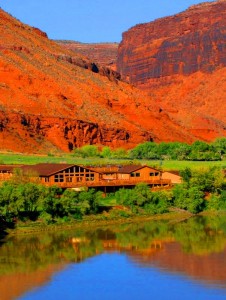
We pulled into Gateway Canyons road-weary yet excited about being in such a lovely place amidst such awe-inspiring scenery.  Built in the adobe style, the resort exuded all the warmth and enchantment of the Southwest.  And here, too, it felt a good twenty degrees warmer than in Telluride.  We settled into our room and quickly changed for the pool.  The setting sun was slowly turning the sky pink by the time we made it to the hot tub:  Our timing couldn’t have been more perfect.  It felt terrific to soak and take in this glorious show, especially the play of light that beamed brightly upon the palisade, the iconic rock tower of Gateway.  It felt like we were in the middle of a western movie set.  No wonder John Hendricks, founder of Gateway Canyons and the Discovery Channel, fell in love with this site many years ago.

Gateway Canyons Backdropped by the Palisade

Gateway Canyons Backdropped by the Palisade

Margaritas followed, drawn straight from the tap of the Paradox Grille, extra delicious cocktails that struck the perfect balance between Tequila, lime and Triple Sec.  We raved over our meals of crab cakes (Paula) and fish tacos (me) as my headache slipped gradually away.

I awoke to the electronic bell-like sound of Paula’s laptop turning on.  I rolled over and pulled the pillow over my head.  It occurred to me in that instant that the only people I had traveled with most of my life (that includes sharing a room with) were my mother and lovers (including one husband!).  Girlfriends were great for day trips and such but I hadn’t tried them out much on overnights.

“Well I guess I’m too late for the contest,” Paula cried out.  “It says here that it ended early August.  I thought it was early October and that I’d get my pictures in just in time.  There are some nice shots here though.  Do you want to see the winners?”

I stumbled out of bed and hovered over her computer long enough to see an instant replay of all the natural beauty we had marveled at just yesterday.  “Well at least we were able to see some pretty impressive scenery that we wouldn’t have otherwise seen,” I said.

“That’s right!”  Paula replied with all the positivity that I had always admired so much in her.  We were indeed a fine match in the happy outlook department.

The Hollywood Gallery at the Gateway Auto Museum

The Hollywood Gallery at the Gateway Auto Museum

Our day was spent exploring the resort, hiking around the outlying area and then visiting the Gateway Auto Museum, a dazzling collection of all-American, roving works of art, assembled by Mr. Hendricks.  Paula was later whisked off (via a golf cart) to the Medicine Wheel Spa for a massage while I lolled at the pool, an oasis shaped like the curvilinear rims of the nearby canyons.  It was the end of September, but here it felt like summer.  We carted remnants of our adventures back to our room:  a small branch of marigold-colored leaves that Paula had found, a few sprigs of sage that I had gathered, a wreath of sage and other redolent high desert plants that Paula had crafted for me, my interminable stack of brochures and other assorted reading material that I always picked up throughout my travels.   

Kiva Pool Area at Gateway

Kiva Pool Area at Gateway

We eased into an even deeper state of relaxation poolside with beer and wine, the perfect accompaniment to our chitchat that ranged from lengthy evocations about the color taupe (a dreary choice for your walls, according to Paula) to lots of sharing about family and friends.  Aside from politics (which we carefully averted), Paula and I related to all in very compatible ways.  She proved to be quite the extraordinary travel companion.  As a travel writer, I also greatly appreciated her observant eye that prompted her to comment on all that was wonderful about a place as well as that which was lacking.  (Here, for example, we both noticed the need for a mirror in the bedroom, bath and shower amenities that could easily flow out of their little plastic containers and a better selection of music piped in at the pool.)

After another fine meal at the Grille, the evening ended as it had begun, stretched out on chaise lounges alongside the pool, talking and laughing like two long lost friends.  This time though we stared up at the stars and wondered from which planet we had descended.

Our second night at Gateway Canyons proved as restful as our first.  Paula and I both marveled at the quiet of the room and the comfort of the beds.  “Plus it’s the combination of the sun and all the soaking in the water,” I added.  

The next day was Tuesday which meant that both of us had to do a bit of work.  Fortunately it was early, yet we felt rushed since we wanted to attend the ceremonial opening of the Medicine Wheel Spa that takes place daily at 9:15 a.m.  Being a writer, I work mostly in silence.  As a real estate agent, Paula seems to conduct much of her business on the phone.  We were both on deadlines and locked into our own work modes rather intensely.  

“Paula-aaa,” I whispered loudly as I gestured to her to keep her voice down on the phone.  Two minutes later I indicated to her that perhaps she could take her call in the bathroom.  

“Oh sure, sure,” she nodded and gently closed the door behind her.  No sooner was I settled back into my place on the bed with my laptop did I hear this bellowing sound emanating from within the bathroom.  The tiled and very grand interior of our salle de bain made it seem as though Paula was broadcasting her real estate dealings over a P.A. system.  By now I was feeling like a royal pain in the butt, but I had to knock on the door and indicate to Paula that the bathroom phone booth setup had made the situation worse.

Somehow we managed to get out the door in time, work doings well underway, with just a few minutes to spare to make our way toward the Medicine Wheel Spa ceremony.  Four teepees set amongst the cottonwoods in the shadow of the towering palisade anchor the medicine wheel that has been carefully installed here.  Part labyrinth, part zen garden, this sacred, healing space draws inspiration from the Native Americans in its design and purpose.  I walked slowly behind Paula over stones upon which life’s most intrinsic qualities were written :   faith, love, integrity, peace and many more inspirational words passed beneath our feet as we padded along.  Susan, the spa director and the person largely responsible for this carefully planned creation, led a small group of us around until we gathered about an immense crystal at the center; here we were each “smudged” with sage.  In less than ten minutes, I felt a keen sense of self awareness and centeredness, a clearing out of sorts that made me feel better prepared for the day.

The Iconic Palisade

The Iconic Palisade

As we walked over to the Paradox Grille for huevos rancheros, I thought how most men would think that that ceremony was a bunch of hocus pocus, unless they allowed themselves to surrender to such a ritual.  I was glad that I had walked the stones with Paula.  In the past two days, we were surrounded by couples, lovers nuzzling at the pool or walking hand in hand along the beautifully maintained pathways.  I didn’t envy any of them since I was sharing my own special moments with my dear friend.

We asked for a late checkout and milked our pool lounging and soaking a little while longer.  There was one last thing to try at the Grille before leaving:  shrimp po’ boys in honor of the chef that hails from New Orleans.  We savored every crunchy bite of fried crustaceans with big sips from our especially lemony Arnold Palmer iced teas.  Truly it felt as though we had stayed at Gateway Canyons a week.

Great amphitheaters of rock opened up before us as we drove away from Gateway.  Oh, to be a geologist, I thought.  The colors ebbed from brick red to burnt sienna to our much-talked-about taupe.  With each transition toward the more muted tones, the vegetation grew in importance.  And since this was fall, clumps of sunburst yellow leaves punctuated the cottonwoods amidst their still primarily green displays of foliage.

Paula passed the driver’s wheel to me so that she could take a little nap, a true sign of friendship and trust, particularly since I’m always less than boastful about my driving abilities.  I thought about our stay at Gateway Canyons which already seemed too far back in the rearview mirror.  Next time I’d like to go to see the Discovery Theater, set to open there in less than a year, I thought.  Maybe they’ll even be conducting tours up at the uranium mine on John Brown Road, the dirt road that leads to Moab, UtahThey’re mining there already and I heard that uranium tours might become one of the resort’s latest amenities.  I’ll have to tell Paula about this—I bet she’d love to come along.

Gateway Canyons, 866-671-4733 or 970-931-2458, www.gatewaycanyons.com

Discovery Channel, www.discovery.com

Most of the first bunch of photos featured above were winners from the Saving Paradox photo contest.  You can view more and learn about this organization’s efforts at www.savingparadox.org.

You can also view great photos of the Unaweep Canyon and Delores and San Miguel Rivers by John Meyer at www.pbase.com/johnme23/unaweep.

Book Pick

“The Performing Art of the American Automobile,” by Jonathan A. Stein and Michael Furman.  This book is available at the Gateway Auto Museum gift shop; you can also call them to place an order.

 
  • Email Newsletter icon, E-mail Newsletter icon, Email List icon, E-mail List icon Sign Up Today for My E-mail Newsletter
    For Email Marketing you can trust
  • Categories

  • Ads


  • Recent Posts

  • Meta

  • Disclosure

    This blog is a personal blog written and edited by Maribeth Clemente. This blog sometimes accepts forms of cash advertising, sponsorship, paid insertions or other forms of compensation. The compensation received may influence the advertising content, topics or posts made in this blog. That content, advertising space or post may not always be identified as paid or sponsored content. The owner of this blog is sometimes compensated to provide opinion on products, services, Web sites and various other topics. Even though the owner of this blog receives compensation for certain posts or advertisements, she always gives her honest opinions, findings, beliefs or experiences on those topics or products. The views and opinions expressed on this blog are purely the blogger's own. Any product claim, statistic, quote or other representation about a product or service should be verified with the manufacturer, provider or party in question. This blog does not contain any content which might present a conflict of interest.
  • Permission

    Please note that unless otherwise attributed to someone else, the content that appears on this Web site/blog is the property of the author, Maribeth Clemente. Written permission is required if you choose to use or excerpt any of this material.